
RBA Holds Cash Rate at 3.60%: What Melbourne Cup Day's Decision Means for Borrowers
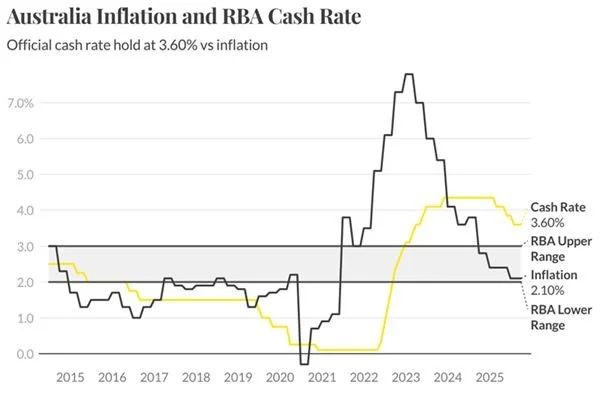
The Reserve Bank of Australia has opted to hold the cash rate steady at 3.60% on Melbourne Cup Day, reflecting a cautious approach in response to stubbornly high inflation that has recently ticked upward. This decision was unanimous among the Board members, signaling firm resolve to keep rates on hold despite earlier hopes for relief.
Inflation Concerns Take Centre Stage
While inflation has fallen substantially since the 2022 peak, recent data has given the RBA pause. Trimmed mean inflation rose to 3.0% over the year to September, up from 2.7% in the June quarter – marking the first increase since December 2022 and a result that was materially higher than the Bank's August forecasts.
Headline inflation rose sharply to 3.2% over the year in the September quarter, pushed higher in part by the cessation of electricity rebates in several states. According to the Australian Bureau of Statistics Consumer Price Index data, the biggest price pressures came from housing (up 2.5%), recreation and culture (1.9%), and transport (1.2%).
The RBA's assessment is that some of the increase in underlying inflation was due to temporary factors, but the uptick has nonetheless raised concerns about persistent price pressures in the economy.
Labour Market Showing Signs of Softening
The unemployment picture has shifted noticeably. The unemployment rate rose to 4.5% in September from 4.3% in August, marking the highest level recorded since late 2021. However, labour market conditions remain a little tight, with measures of labour underutilisation at low rates, job vacancies still at high levels, and businesses continuing to report difficulty sourcing labour.
Growth in employment has slowed by slightly more than expected, but the labour market hasn't weakened enough to prompt immediate action from the RBA. Wage growth has eased from its peak, though weak productivity growth means unit labour costs remain high.
RBA's Cautious Stance: Policy Near Neutral
In her post-meeting press conference, Governor Michele Bullock characterised monetary policy as being "pretty close to neutral", suggesting the cash rate is neither strongly stimulating nor restricting economic activity. The Board decided it was appropriate to maintain the cash rate at its current level, noting that financial conditions have eased since the beginning of the year but it will take time to see the full effects of earlier cash rate reductions.
The RBA's forward guidance emphasizes data dependency. Given the recent evidence of more persistent inflation, the Board judged it appropriate to remain cautious, updating its view of the outlook as the data evolve.
Expert Views: When Will Rates Move Again?
The banking sector has significantly revised its rate cut expectations. Major Australian banks have abandoned their forecasts for a 2025 rate cut following the September quarter inflation surprise.
According to recent bank forecasts:
ANZ: Expects no cut until February 2026
Commonwealth Bank: Now predicts rates will remain on hold for a "prolonged period," with any movement dependent on inflation returning to the target band in late 2026
NAB: Has pushed back potential rate relief to May 2026 or later
Westpac: Previously hoped for a November cut but now expects rates on hold through year-end, with February 2026 "far from certain"
Out of 35 experts and economists surveyed by Finder, 30 forecast the RBA would keep the cash rate at 3.6% in November, with two-thirds predicting at least one more cash rate cut in the next 12 months, most expecting it will arrive in February 2026.
Property Market Maintains Momentum
Despite elevated interest rates, Australia's property markets have shown surprising resilience. National dwelling values rose 2.2% in the three months to September 2025, marking the strongest quarterly gain since May 2024.
Recent market performance shows:
Victoria: 519 auctions with 61% clearance rate, monthly home values up 0.9%
New South Wales: 1,339 auctions with 57% clearance rate, monthly values up 0.7%
Queensland: 282 auctions with 54% clearance rate, monthly values up 1.8%
Western Australia: 15 auctions with 60% clearance rate, monthly values up 1.9%
South Australia: 144 auctions with 74% clearance rate, monthly values up 1.4%
Housing demand is expected to remain resilient, especially in Perth, Brisbane, and Adelaide, while limited new approvals and tight supply keep pressure on prices. Total listings remain nearly 20% below the five-year average, maintaining competition particularly through the spring selling season.
What This Means for Borrowers
With the cash rate holding at 3.60%, mortgage holders on variable rates will see their repayments remain at current levels for the foreseeable future. The RBA's cautious stance suggests rate cuts are unlikely before early 2026 at the earliest.
For those considering refinancing or reviewing their loan structure, now presents an opportunity to ensure you're getting competitive rates. With some lenders adjusting their offerings in anticipation of an extended hold period, comparing options could yield savings.
Fixed rate borrowers who locked in rates during the peak may find themselves in a favorable position, though those coming off fixed terms should prepare for potentially higher variable rates.
The Economic Balancing Act
The RBA faces a delicate balancing act. Private demand is recovering and labour market conditions still appear a little tight, leading the Board to maintain its cautious approach. However, unemployment is rising and households remain under pressure from the cumulative impact of past rate increases.
The RBA has concluded from the latest upside inflation surprise that there is a bit less capacity in the economy than previously thought, based on survey measures of capacity utilization even as the labour market has softened.
Looking Ahead to December
The next RBA cash rate decision will be announced on 9 December 2025, the final meeting of the year. This meeting will be crucial as it comes after the release of another labour force print and potentially more economic data that could influence the Board's thinking.
If the activity backdrop proves materially weaker than anticipated, the RBA Board does have the option of easing in December, though most economists consider this unlikely given current inflation trends.
For now, the message from the RBA is clear: rates will remain at 3.60% while the Bank closely monitors inflation data, labour market developments, and household consumption patterns. The path forward will be determined by how these economic indicators evolve over coming months.
Sources:
Reserve Bank of Australia Official Statement (November 4, 2025)
Australian Bureau of Statistics - Consumer Price Index and Labour Force Data (September 2025)
Major bank economic forecasts (ANZ, CBA, NAB, Westpac)
Finder.com.au Expert Survey (November 2025)
