
When Is the Best Time to Buy Property in Australia? The Answer Is Simpler Than You Think
Every year, Australians ask the same question:
"Should I buy now, or wait until the market cools?"
It's a fair question. Interest rates move, governments introduce new policies, elections create uncertainty, and the media constantly predicts property booms or crashes.
But if history has taught us anything, it's this:
The best time to buy property in Australia is when you can afford to.
Trying to perfectly time the market is one of the biggest mistakes aspiring property investors make. The real opportunity isn't buying at the absolute bottom—it's getting into the market and allowing time to do the heavy lifting.
Stop Waiting for the "Perfect Time"
There is always a reason to wait.
Interest rates are too high.
Property prices have risen too much.
Prices might fall.
The economy feels uncertain.
There's an election coming.
The government is changing tax policies.
Yet despite decades of uncertainty, Australia's residential property market has continued to create wealth for millions of Australians.
Think about what property has overcome over the past 20 years:
The Global Financial Crisis
Multiple interest rate cycles
Banking Royal Commissions
COVID-19 lockdowns
Inflation shocks
Changes to lending rules
State and Federal housing policies
Despite all of these events, well-selected residential property has remained one of Australia's most effective long-term wealth-building assets.
Governments Can Influence the Market— But They Don't Control It
Every few years, new policies are introduced to improve housing affordability.
Governments adjust:
Interest rates (through the Reserve Bank)
Tax incentives
First-home buyer schemes
Foreign investment rules
Planning regulations
Housing targets
These measures can influence demand or improve affordability for certain buyers.
But they don't change the fundamental economics of the property market.
At its core, property prices are driven by one simple principle:
Supply and Demand
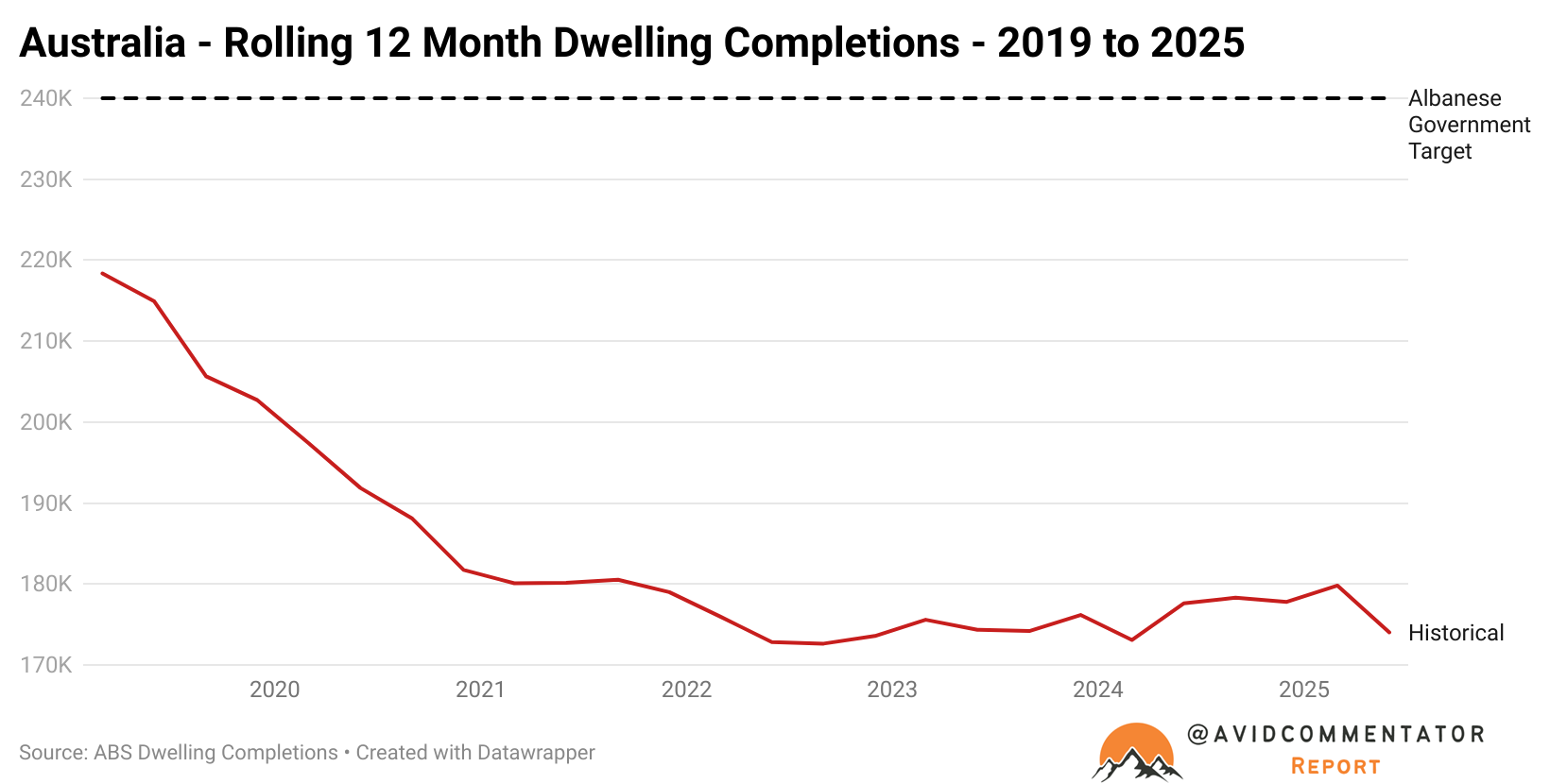
With demand growth already forecasted by the federal government’s National Housing Supply and Affordability Council to outstrip supply growth, coming in below the already relatively anaemic 183,000 completions predicted for 2025-26 would make an already challenging set of circumstances even worse.
Australia's Housing Shortage Isn't Going Away Overnight
Australia has been underbuilding homes relative to population growth for many years.
Migration continues to increase housing demand, while new housing construction has struggled due to:
Labour shortages
Rising construction costs
Builder insolvencies
Planning delays
Limited land supply in major cities
The result?
Australia remains structurally undersupplied with housing.
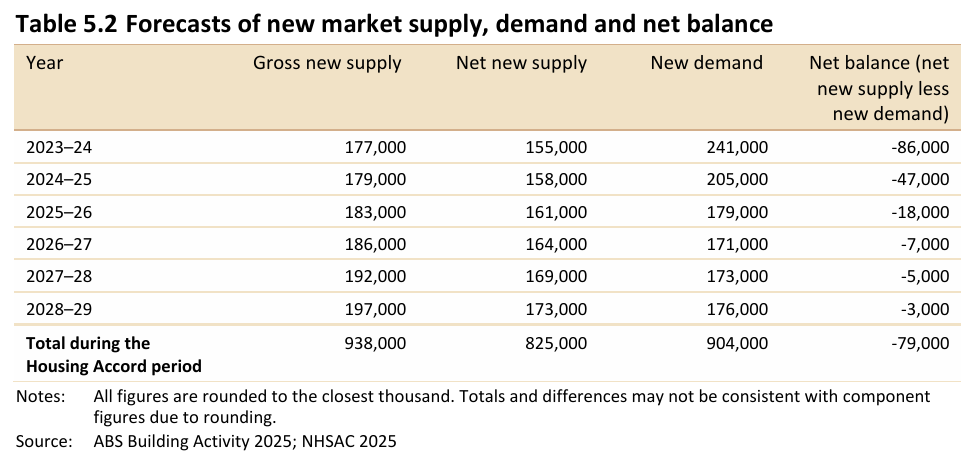
While estimates vary, industry experts broadly agree that Australia faces a housing shortage running into the hundreds of thousands of homes today, with projections indicating the gap could grow substantially over the coming years if construction doesn't accelerate.
When demand consistently exceeds supply, prices naturally come under upward pressure over the long term.
Time in the Market Beats Timing the Market
Many buyers spend years waiting for the "perfect" buying opportunity.
Ironically, during that time:
Property prices may continue rising.
Their borrowing power may reduce.
Inflation increases replacement costs.
They miss years of capital growth.
Property is a long-term investment.
The wealth is rarely created by buying at the exact bottom.
It's created by:
Buying quality property.
Holding it over time.
Allowing capital growth to compound.
Using equity strategically to build further wealth.
The longer you own quality property, the more opportunity it has to grow in value.
Can Interest Rates Affect Property Prices?
Absolutely.
Higher interest rates can slow demand because borrowing becomes more expensive.
Lower interest rates can stimulate demand.
However, history shows that interest rates are just one piece of the puzzle.
Australia has experienced periods of both high and low interest rates while property values have continued to grow over the long term.
Why?
Because housing demand doesn't disappear.
People still need places to live.
Families continue to grow.
Migration continues.
Housing remains a basic necessity.
Buying When You Can Afford It Makes Sense
Instead of asking:
"Is now the perfect time?"
Ask yourself:
Can I comfortably afford repayments?
Do I have a long-term investment strategy?
Am I buying quality property?
Can I hold the property through market cycles?
If the answer is yes, then waiting for perfect market conditions may actually cost you more than entering the market today.
Wealth Is Built Over Decades—Not Headlines
The Australians who have built significant wealth through property rarely did so by perfectly predicting the market.
Instead, they:
Started when they were financially ready.
Bought quality assets.
Stayed invested.
Ignored short-term noise.
Let time and compounding work in their favour.
That's why property continues to be one of the most powerful wealth-building vehicles available to everyday Australians.
The Bottom Line
No one can consistently predict the next interest rate decision, election outcome, or market cycle.
What you can control is your own financial readiness.
If you've done your research, have the right strategy, and can comfortably afford to buy, today's market may be the best opportunity you'll ever have—because every year spent waiting is another year you're not building equity or benefiting from long-term capital growth.
Remember:
The best time to buy property isn't when the headlines tell you to.
It's when you're financially ready to take advantage of one of Australia's most proven long-term wealth-building assets.
Ready to Find Out If You're in a Position to Invest?
At PWF, we help everyday Australians understand whether they're financially ready to build wealth through residential property.
Whether you're buying your first investment property or looking to expand your portfolio, our team can help you develop a strategy based on your goals—not market headlines.
Book a complimentary strategy session today and discover what may be possible with the right plan.